


Raft® Survival - Ocean Nomad
4.329.21K Reviews
App Specs
- Version
- 2.9.4
- Updated On
- License
- Free
- Downloads
- 100,000,000+
- Developer
- Survival Games Ltd
- Categories
- Simulation
- Platform
- Android, iOS
Screenshots
 Analysis by AppCompare
I like ocean-survival games most when each small decision matters: whether to gather one more useful item, repair a vulnerable spot, or spend time improving a shelter. Raft® Survival - Ocean Nomad builds its appeal around that steady tug between making do and making progress. It is a mobile survival simulation about starting with very little and shaping a raft into a more capable home, and its best moments come from watching a simple platform become something that feels earned.
That loop is easy to understand, but it is not automatically relaxing. The sea gives the game a peaceful backdrop while sharks and resource needs keep pressure on the player. I would recommend it to someone who enjoys crafting and gradual expansion, especially in short sessions, but not to anyone looking for a story-first adventure or an entirely hands-off ocean cruise.
A small start that gives each choice weight
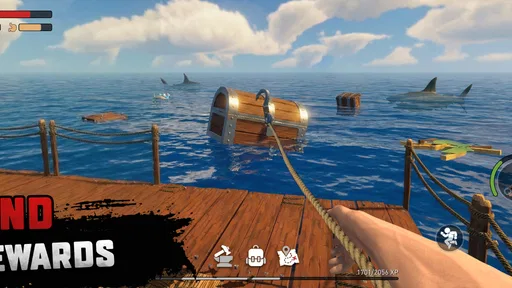
The opening idea is immediately readable: you are stranded on a modest raft, and the water around you is both the setting and the source of supplies. Floating debris turns passing moments into decisions. Gathering materials feels useful because it feeds into the next step, whether that is a tool, a defense, or more space to work with.
That makes the game’s basic rhythm more compelling than a bare survival checklist. You are not simply collecting for the sake of a counter; you are trying to turn a fragile base into somewhere more dependable. The scale of the goal can be satisfying even when progress is gradual, because each improvement has a visible place on the raft.
Who will enjoy its pace—and who may not
I think it suits players who like building in stages and do not mind repeating familiar tasks while working toward a larger setup. It can also fit an everyday break: I might check in during a spare moment, collect what is within reach, make one practical improvement, and stop before the session becomes a long commitment. The clear survival premise makes it easy to return to without needing to remember a complicated plot.
On the other hand, players who want constant new scenes, tightly scripted action, or a purely peaceful decorating game may find the routine less appealing. Gathering is part of the point, so someone who dislikes resource loops will likely notice that friction quickly. The shark threat also means the raft is not just a blank canvas; protecting it competes with the time and materials that could go toward expansion.
The Thrill of the Open Sea
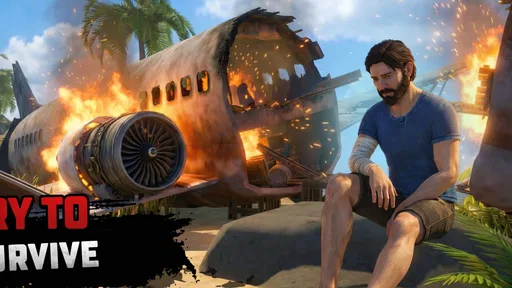
Raft® Survival - Ocean Nomad starts with you stranded on a small raft, surrounded by endless water. The premise is simple but engaging: collect resources, fend off sharks, and expand your raft to create your own floating fortress.
Worth Reading Before You Choose

Switching to Android Auto Means Rethinking Your Driving Routine

Google Calendar Makes a Crowded Week Easier to Manage

Baby Panda World Brings Quick Play to Modern Phones, but Its Game Library Feels Busy

ESPN’s Live Game View Makes Following Close Games Easier

QuizzLand Review: A Good Fit for Short Trivia Breaks, Not Every Player

Basketball Stars: Multiplayer Is Fast, but Can It Recover When Matches Go Wrong?
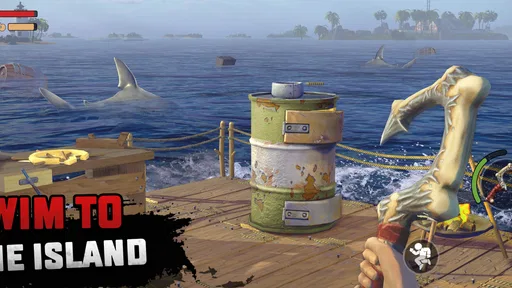
From the get-go, the game pulls you in with its immersive graphics and realistic ocean sounds. The sense of isolation is palpable, making every wave and gust of wind feel like a real adventure. You’ll find yourself constantly on the lookout for debris and useful items floating by, which brings a satisfying sense of progression as you gather more resources.
Crafting Your Way to Survival
The crafting system in this game is intuitive and rewarding. You start with basic tools and gradually unlock more advanced equipment as you gather resources. The learning curve is gentle, which helps you get a handle on things without feeling overwhelmed.
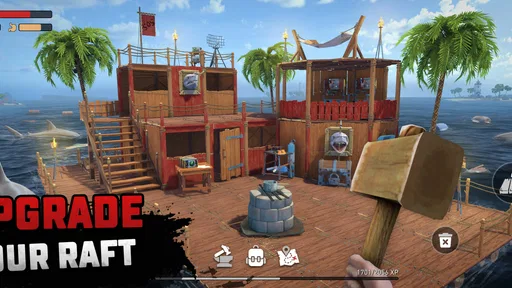
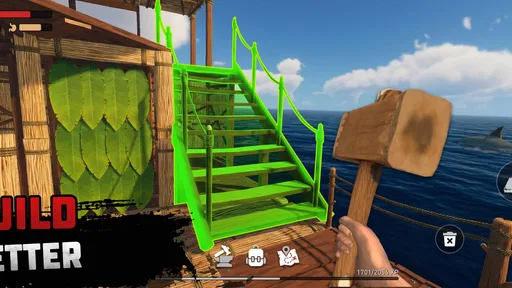
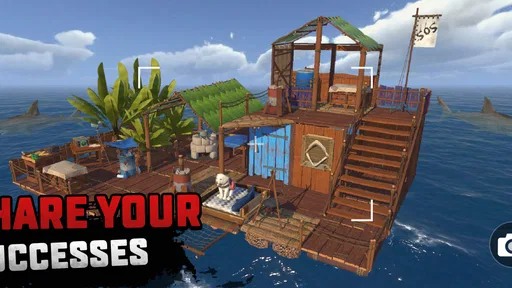
One of the coolest aspects is how you can personalize your raft. Want a second story or a rooftop garden? Go for it! The customization options add a layer of depth that keeps the gameplay fresh and engaging.
Making progress without wasting materials
My practical advice is to treat every new crafting option as a choice about priorities, not an instruction to build everything immediately. When resources are limited, I would first think about whether the next item helps me collect, defend, or create room for later plans. That simple habit reduces the frustration of spending materials on an appealing upgrade and then finding that a more urgent need is competing for the same supplies.
I also find it useful to separate a session into one small objective: gather, craft, or improve the raft. Trying to do all three at once can make a survival game feel like chores, while a single goal gives the session a natural stopping point. If the game has drawn you in for longer, you can always choose another task rather than wandering between unfinished plans.
Customization is most rewarding when it supports how you actually want to play. A larger or more elaborate raft can be satisfying to look at, but expansion also raises the question of what you can maintain and protect. I would build with a purpose rather than chase size alone; a compact, useful layout can feel more successful than a sprawling platform that has consumed resources without making the next survival step easier.
Sharks, Sharks, and More Sharks
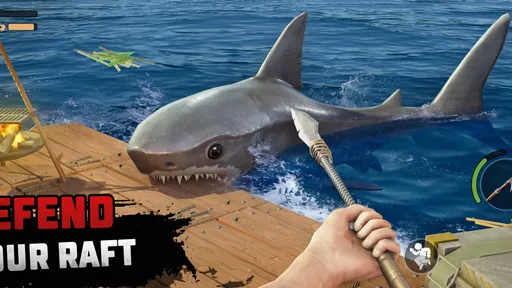
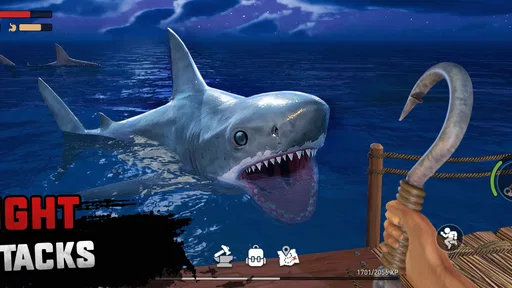
Let’s talk about the sharks, because these toothy foes are both your biggest challenge and your best resource. They circle your raft, waiting for a chance to chomp down on your hard work. You’ll need to craft weapons and defenses to keep them at bay, which adds a nice layer of strategy to the game.
Every encounter with a shark is a mini adrenaline rush, and successfully fending them off is incredibly satisfying. Plus, the resources you gather from defeating a shark can be a real game-changer as you progress.
When survival pressure becomes a trade-off
The threat works best for me when it changes what I do next. A shark encounter interrupts the calm routine and makes defense feel relevant, rather than leaving the ocean as attractive scenery around an otherwise ordinary building game. There is a useful tension in deciding whether to spend time strengthening the raft or put those resources toward broader progress.
That same pressure is also a limitation. If you hoped to spend a session calmly arranging a floating home, being pulled back toward survival needs may feel like interference rather than excitement. I would not choose this as a purely decorative builder. Its creative side matters, but it sits alongside danger and upkeep, not in place of them.
For a more comfortable early routine, I would avoid treating every shark encounter as an invitation to chase rewards. Deal with the immediate risk, then return to the goal you had set for the session. This keeps combat from swallowing the crafting loop and helps preserve materials for useful improvements. The best balance is not necessarily the most aggressive one; it is the approach that leaves the raft better prepared for what you want to do next.
The Quests and Exploration
Apart from the survival mechanics, the game also offers quests that guide you as you explore the ocean. These quests provide a structure to your journey and offer valuable rewards that make the grind worthwhile.
Exploration is another highlight. As you sail further, you’ll discover new islands and biomes, each with unique resources and challenges. This variety keeps the game from feeling repetitive and encourages you to venture into the unknown.
A reason to leave the familiar raft behind
Quests help when the open-ended routine starts to feel directionless. I like having a clear next objective, because it gives resource gathering a purpose beyond “collect more.” A sensible way to use that structure is to check what the current task asks of you before spending materials on optional changes. That can make a session feel focused, especially if you only have time to make progress on one goal.
Exploration adds a different kind of decision: staying with what is familiar is comfortable, but moving outward can lead to new resources and challenges. I would treat a trip away from the raft as a planned choice rather than a casual detour, particularly when the current setup still needs attention. The appeal is the change of pace and the possibility of finding something useful; the trade-off is stepping away from the base you have been improving.
This is also where the game differs from many straightforward mobile builders. A conventional builder tends to keep attention on arranging a stable home or completing a sequence of construction tasks. Here, the raft is both your project and your survival base, so outward exploration is tied to the practical question of what you can bring back and what you may have to handle along the way. Players who want a settled construction sandbox may prefer that other style; players who enjoy having a reason to venture out may appreciate this mix.
How it fits a real mobile routine
Imagine opening the game while waiting for a meal to cook. You could check your immediate needs, collect nearby materials, and use the brief session to finish one modest improvement. If a quest offers a clear direction, it can shape that task; if not, you can focus on making the raft more useful. The important thing is that the game’s loop can be approached in pieces, rather than requiring every visit to become a major expedition.
For a longer evening session, I would switch priorities: plan around a quest or exploration goal, make sure the raft is in a condition you are comfortable leaving, then accept that the outing may take attention away from construction. That distinction helps set expectations. The game can serve both a quick check-in and a more involved stretch of play, but those sessions work best when I decide what I want from them before I start.
How it compares with other survival games
Compared with survival games built around a broad landscape and frequent changes of location, this one makes the raft the center of the experience. That gives construction more emotional weight: improvements are not just objects placed in a safe base, but changes to the small platform on which your survival depends. The ocean setting also creates a more focused sense of isolation than a game that constantly sends you through varied terrain.
The trade-off is that the repeated resource loop is more visible. If you enjoy crafting but need a new environment or story beat every few minutes, another survival adventure may hold your attention better. If you like watching one base evolve and are happy for exploration, quests, and shark encounters to break up that work, this narrower focus is a strength rather than a drawback.
What to expect before you start
The game is free to play, though it includes optional in-app purchases ranging from $0.49 to $129.99 per item. I would go in expecting the core appeal to be the survival-and-building loop, not assuming that buying something is necessary to enjoy it. If you prefer to avoid optional spending entirely, it is worth paying attention to purchase prompts and keeping your own budget in mind rather than treating every offer as part of the required progression.
It is a simulation game from Survival Games Ltd, with a 4.3 average from around 1.2 million ratings and more than 100 million installs. Those figures suggest it has reached a large audience, but they do not tell you whether its pace will suit you; the more useful question is whether you enjoy gathering, defending a base, and building in small steps. It is rated Everyone 10+, and version 2.9.2 requires Android 7.0 or later.
There is also a multiplayer option for playing with friends. I would recommend it to someone who already enjoys cooperative survival because sharing decisions can make resource priorities and threats more engaging. If you mainly want a quiet solo builder, multiplayer is not a reason by itself to choose the game; the solo survival loop should be appealing on its own. The game was released on July 27, 2018, so it is not a new arrival, but its central draw remains the familiar, satisfying idea of gradually improving a vulnerable raft.
Why You'll Get Hooked
What makes Raft® Survival - Ocean Nomad so addictive is its perfect balance between relaxation and challenge. The serene ocean setting is calming, yet the constant need to gather resources and fend off threats keeps your adrenaline pumping. It’s a game that you can easily lose hours in, thanks to its engaging mechanics and beautiful design.
The game also offers multiplayer options, which is perfect if you want to team up with friends for a co-op survival experience. Sharing the journey with others adds a social element that enhances the fun and strategy involved.
One small caution: the calm visuals can make it easy to underestimate how much attention the survival loop asks for. If you prefer a game you can leave running while barely checking in, this is not the best fit. I would choose it when I am in the mood to make decisions and work toward a tangible improvement, not when I want a completely passive background activity.
In conclusion, if you’re looking for a mobile game that combines survival, exploration, and a bit of creativity, Raft® Survival - Ocean Nomad is worth checking out. It’s a delightful dive into the world of oceanic survival that will keep you entertained for hours on end. So grab your virtual oar, start crafting, and prepare to set sail on the adventure of a lifetime!
My verdict on the ocean-bound routine
I would recommend it most to players who enjoy a clear survival loop, visible base-building progress, and a little tension mixed into their crafting. It gives the raft a strong identity: you are not just decorating a home, but improving the place that has to carry you through the next stretch of play. Quests and exploration offer useful direction when you want more than routine gathering, while the shark threat prevents the setting from becoming entirely peaceful.
I would skip it if you dislike repeated resource collection, want a story-led game, or expect a builder that lets you create without defending what you make. Those are not minor preferences here; they shape whether the central loop feels absorbing or tiring. For me, the most enjoyable approach is to set one practical goal, make a little progress, and leave the next improvement for another session. As a free ocean-survival simulation, it is a worthwhile choice for that particular mood, with enough pressure to make each expansion feel earned.
Pros
- Immersive survival gameplay experience.
- Expansive world with diverse challenges.
- Crafting system is engaging and detailed.
- Offline mode available for uninterrupted play.
- Regular updates improve game mechanics.
Cons
- Resource gathering can be repetitive.
- Graphics may not appeal to all players.
- In-app purchases necessary for faster progress.
- Game can be demanding on device battery.
- Occasional glitches disrupt gameplay.
FAQs for Raft® Survival - Ocean Nomad
What is the main objective of Raft® Survival - Ocean Nomad?
In Raft® Survival - Ocean Nomad, the primary objective is to survive in the open ocean after a catastrophic event. Players must gather resources, craft tools, and build a floating shelter while fending off threats like sharks and harsh weather. Survival relies on strategic planning and resource management.
How do I gather resources in the game?
Players gather resources by using a hook to collect floating debris in the ocean, such as wood, plastic, and other materials. These resources are essential for crafting tools and building your raft. Additionally, players can dive underwater or explore nearby islands for more resources and hidden treasures.
Are there any in-game purchases?
Yes, Raft® Survival - Ocean Nomad includes optional in-game purchases. These purchases can enhance gameplay by providing additional resources, tools, or cosmetic items. However, the game can still be fully enjoyed without spending real money, as players can earn resources through gameplay.
Is Raft® Survival - Ocean Nomad suitable for all ages?
Raft® Survival - Ocean Nomad is generally suitable for teens and adults due to its survival themes and mild violence, such as shark attacks. Parents should be aware of these elements when considering the game for younger players. The game promotes problem-solving and strategic thinking.
Can I play Raft® Survival - Ocean Nomad offline?
Yes, Raft® Survival - Ocean Nomad can be played offline. This feature allows players to enjoy the game without needing a constant internet connection, making it convenient for play during travel or in areas with limited connectivity. However, some features may require online access.


